Illustrations
Desi American Summer: A Political Portrait (2026-present)
Medium: Acrylic marker and acrylic paint on Bristol board with Photoshop distortion, archival pigment print
Description: Desi American Summer is my first series of drawings after years of doodling geometries in my personal notebooks. Created during the summer of 2026, the work is rooted in the political realities of the South Asian diaspora and children of immigrants. The series moves through an assemblage of ideas I've been thinking through, including social movements, conflict zones, jingoism, nonconformity, and sexual liberation, pushing back against the neoliberal and nationalistic conditioning that shapes South Asian political and cultural life. The series was made using a combination of freehand drawings and geometric transfers on Bristol board, with image distortions created in Photoshop.
Political Armistice (2026)
Political Armistice critiques a transnational political system that prioritizes the formal bureaucracy of peace over the preservation of life and land. The work frames the armistice as a diplomatic success for political optics, even after the state has permitted the total destruction of an environment it claims to govern.


Durga's Rebellion (2026)
Durga’s Rebellion places the Hindu goddess of justice, Durga, within a social uprising against imperial forces. Set in a landscape shaped by conflict and unrest, the work brings this godlike figure into everyday struggles for justice, connecting stories of ancient rebellion to present-day movements against political violence and social repression across the South Asian subcontinent and its diaspora.


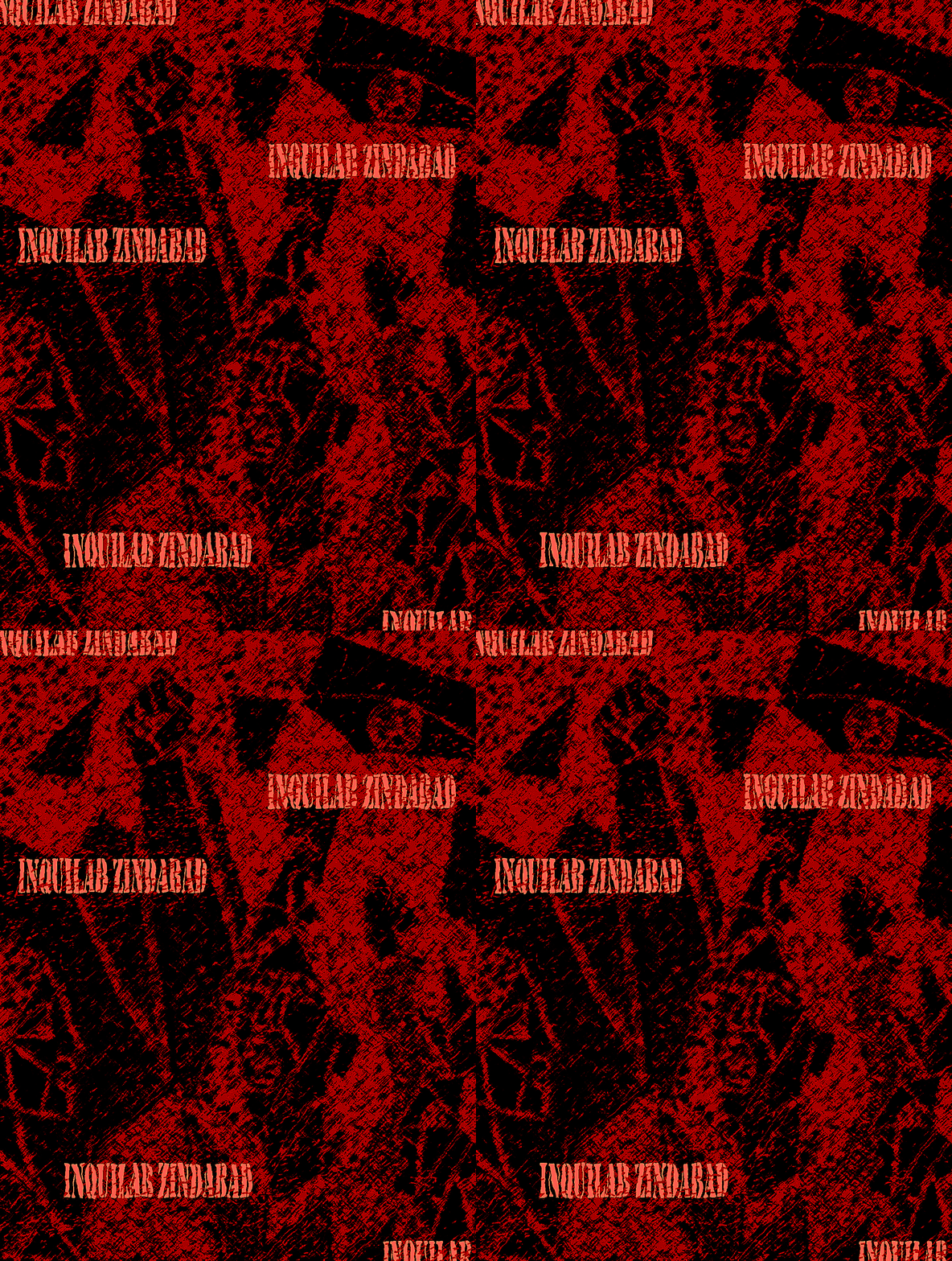
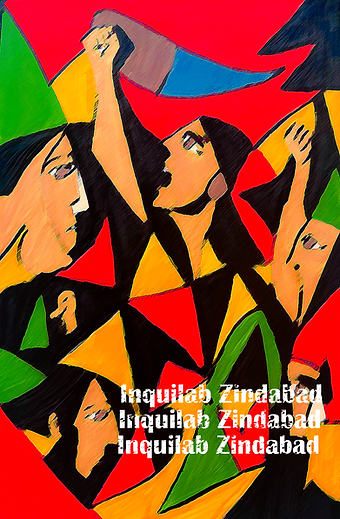
Inquilab Zindabad (2026)
Inquilab Zindabad (Long Live the Revolution) draws from the anti-colonial slogan popularized by the socialist writer Hasrat Mohani and later used by revolutionaries such as Bhagat Singh during the Indian independence movement. The work serves as a reminder of the multicultural foundations of the Indian revolution, reflecting a movement built across religious, regional, and political differences in opposition to British imperialism.
.png)

Occupation on Earth (2026)
Occupation on Earth reflects on the violence of military occupation and religious conflict in the Jammu-Kashmir region. By reworking the phrase “Paradise on Earth,” a slogan long used to romanticize Kashmir within the Desi national imagination, the work contrasts idyllic representations of the region with the realities of its ongoing political unrest.


The Dream (2026)
The Dream draws from a personal dream alongside the poem by Rumi, using the idea of a space "beyond ideas of wrongdoing and rightdoing" to reflect on connection found outside the bounds of conformity.


Compartmentalized (2026)
Compartmentalized abstracts the heart to reflect on the tension between imposed identity and self-definition within the Desi diaspora. The work contrasts labels shaped through Western racial and political categorization with terms associated with liberation and collective struggle, while the figures at the bottom pull against one another to suggest the pressure of being divided across competing expectations and the ongoing reconciliation of personal identity.


The Raksha and the Goddess, Or the Virtue of Human Contradiction (2026)
The Raksha and the Goddess, Or the Virtue of Human Contradiction reflects on the internal struggle between morality, desire, righteousness, and temptation. Through an intimate encounter between two personified deities, the work suggests there is no final resolution between good and evil, only an ongoing negotiation between opposing impulses. The piece engages themes of sexual liberation, treating desire as inseparable from the moments that shape human experience.


Welcome to the Clown Show (2026)
Welcome to the Clown Show examines the Desi diaspora through the image of a kite, a symbol of identity manufactured to be accepted within the American system. The work reflects on how immigrants and children of immigrants are pushed toward neoliberal ideals of success and assimilation while navigating the contradictions and absurdities of life in the West.


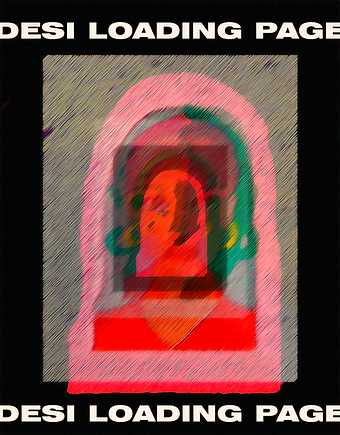
Desi Loading Page (2026)
Desi Loading Page reflects on the tension of navigating cultural belonging from both South Asian and Western perspectives. The work examines the judgment and othering imposed from cultural traditions as well as from American society, where identity is constantly measured against conflicting expectations of assimilation. Out of this tension emerges a hybrid culture formed in negotiation with both worlds, yet fully claimed by neither.

The Garden (2026)
The Garden depicts New York City's Brown and Black immigrant communities against the backdrop of the Knicks' 2026 NBA Championship run.

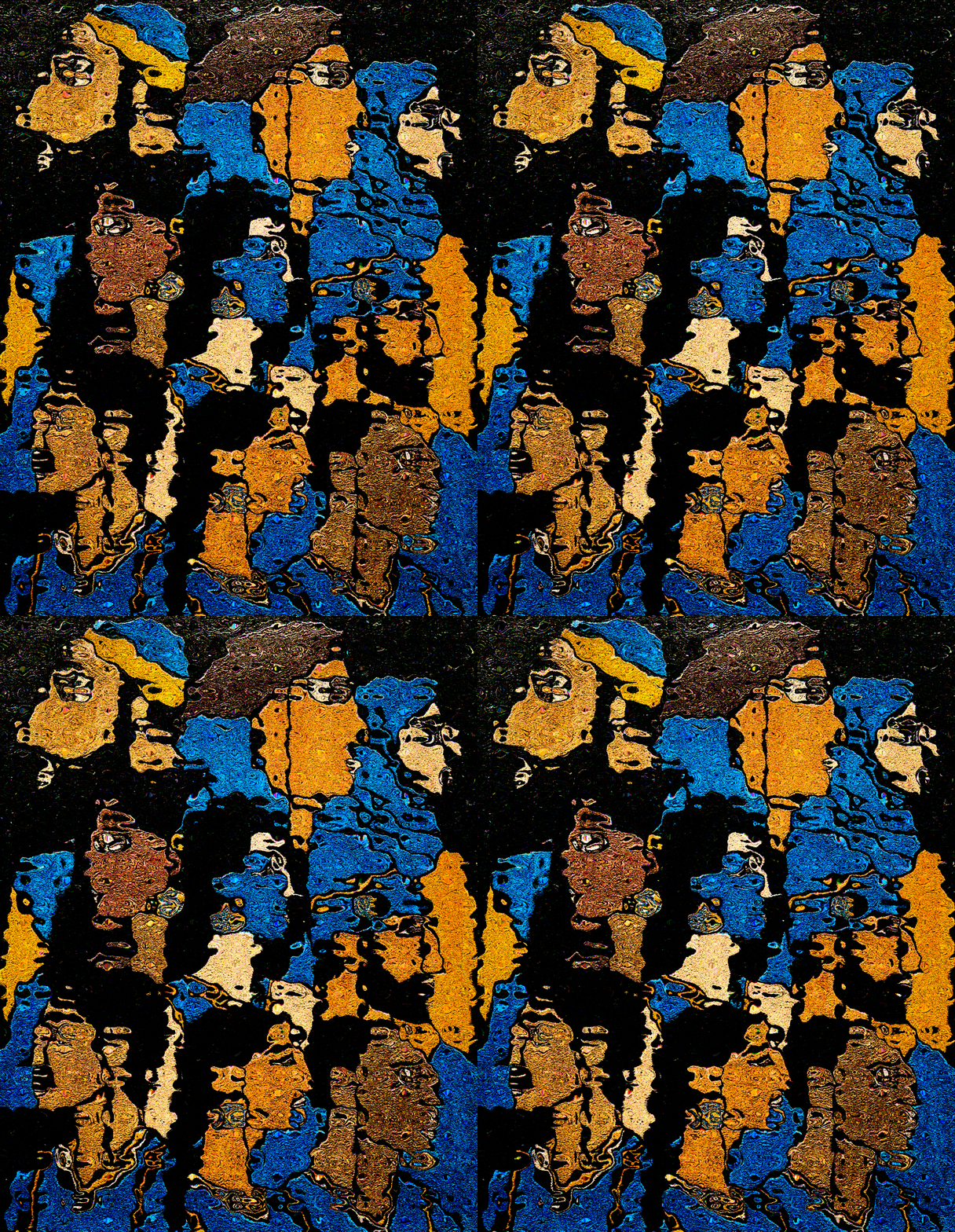
Disruptve Studio Logo (2026)
The Disruptve Studio Logo was created for my nonprofit, which is built around three pillars: arts, activism, and education. Each pillar is inspired by a historical South Asian figure who embodied artivism and public advocacy in their own time (left to right): Amrita Sher-Gil (painter), Bhagat Singh (revolutionary), and Fatima Sheikh (educator and social reformer).
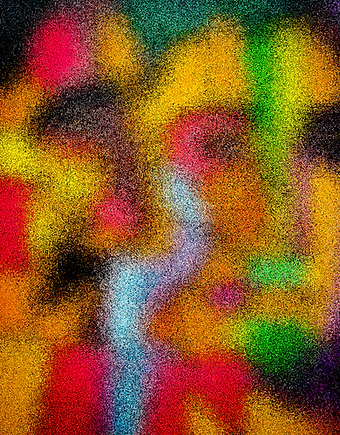

Inquilab Zindabad II (2026)
Inquilab Zindabad II depicts the 2026 Delhi student protests, the "Cockroach Protests" that erupted at Jantar Mantar and ultimately forced the Education Minister's resignation. The title invokes Bhagat Singh's 1929 rallying cry, placing this uprising within India's long lineage of student and civil resistance.